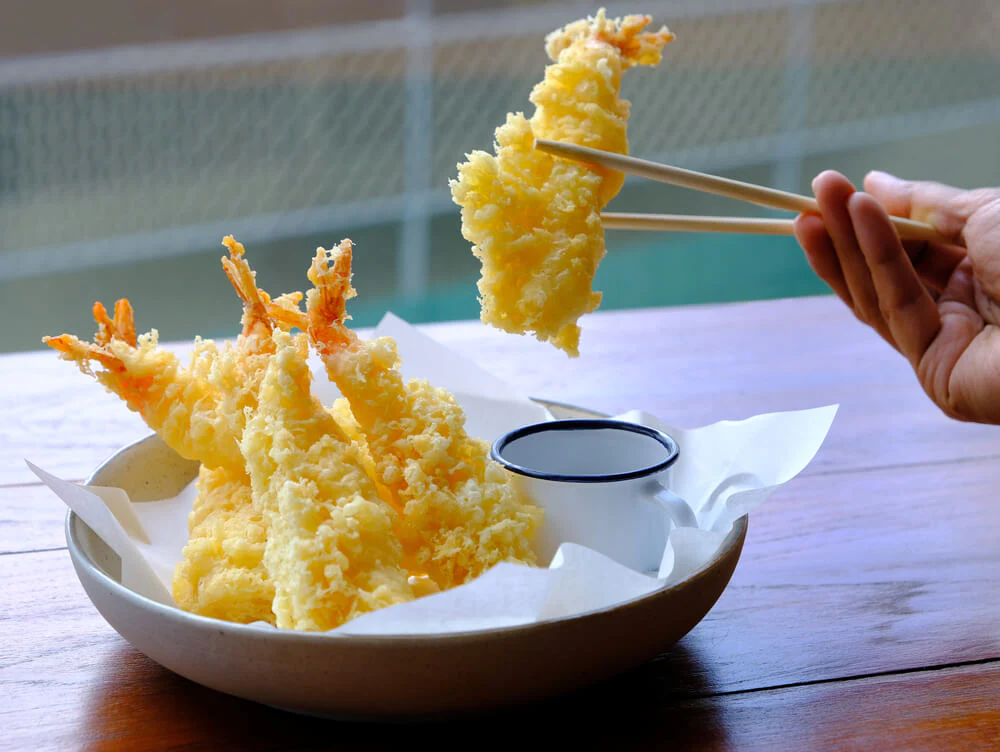
There is something almost magical about the perfect piece of tempura. When done correctly, the coating is a pale, lacy, and impossibly crisp veil that shatters upon impact, revealing succulent seafood or tender vegetables beneath. Achieving this texture isn’t just a matter of culinary luck; it is a fascinating lesson in chemistry. The secret to that ethereal crunch lies almost entirely in temperature control. By understanding the science of tempura and why ice-cold water makes the lightest batter, you can transform a heavy, oily fry into a delicate masterpiece that defines high-end Japanese cuisine.
1. The Enemy of Crispness: Gluten Development
Gluten is the protein network that gives bread its chew, but it is the ultimate villain in tempura. When flour meets water, proteins called glutenin and gliadin bond. Using ice-cold water slows this chemical reaction significantly, ensuring your batter remains thin and crisp rather than bready.
2. Temperature and Molecular Movement
At a molecular level, heat provides energy. Warm water encourages molecules to move and bond faster, accelerating gluten formation. Cold water keeps these molecules sluggish. By keeping the batter chilled, you buy yourself more time to coat the food before the texture turns tough and doughy.
3. The Role of Wheat Starch
Tempura batter typically uses low-protein cake flour. When mixed with ice-cold water, the starch granules in the flour stay separated. This prevents the “clumping” that occurs in warmer environments, allowing the batter to spread thinly and evenly across the surface of your ingredients.
4. Maximizing the Temperature Shock
The “leap” in temperature is vital. When ice-cold batter hits 180°C oil, the water evaporates almost instantly. This rapid evaporation creates tiny steam pockets, puffing up the batter and creating that signature airy structure. A larger temperature gap creates a more dramatic and effective crisping effect.
5. Carbonation as a Secret Weapon
Many chefs substitute ice-cold still water with sparkling water. The dissolved carbon dioxide creates even more air bubbles within the chilled mixture. When combined with the low-temperature science of tempura, these bubbles expand in the hot oil, resulting in an even lighter, “lace-like” finish.
6. Minimizing Over-Mixing
Because cold water inhibits gluten, you don’t need to whisk the batter until smooth. In fact, leaving lumps is preferred. Over-mixing creates a structural strength that traps moisture; a lumpy, cold batter releases moisture quickly in the fryer, which is essential for long-lasting crunch.
7. Preventing Oil Absorption
A heavy, warm batter acts like a sponge, soaking up oil and becoming greasy. A cold, thin batter creates a protective steam barrier. As the cold water turns to steam, the outward pressure prevents the frying oil from penetrating deep into the batter or the food.
8. The Importance of “Just-in-Time” Mixing
Even with ice-cold water, gluten will eventually form if the batter sits. Professional chefs mix small batches with ice cubes right before the ingredients hit the oil. This “just-in-time” approach ensures the temperature remains at its lowest possible point for every single fry.
9. Controlling Enzyme Activity
Wheat flour contains natural enzymes that can break down starches into sugars. These enzymes are more active in warm environments. By using ice water, you suppress this activity, preventing the batter from browning too quickly and ensuring that classic, pale golden tempura aesthetic.
10. Thermal Conductivity of the Batter
Ice-cold water lowers the overall starting temperature of the food’s “shell.” This means the outside takes slightly longer to cook than the inside, allowing the vegetable or shrimp to steam perfectly in its own juices while the exterior achieves a crystalline, brittle structure.
11. The Science of the “Bloom”
When cold batter hits hot oil, it “blooms” or spreads. If the batter is warm, it sets too quickly into a thick glob. Chilled batter remains fluid for a split second longer in the oil, allowing it to stretch into those delicate, spindly “fingers” of crunch.
12. Using Chilled Bowls and Chopsticks
True tempura masters don’t just stop at ice water. They often chill the mixing bowl and even the flour. Using long chopsticks for mixing, rather than a whisk, reduces the mechanical energy and heat transferred from your hands, keeping the gluten dormant and the batter cold.
13. The Impact of Evaporative Cooling
As the cold water in the batter begins to heat up in the fryer, it undergoes evaporative cooling. This process regulates the temperature of the ingredient inside, preventing delicate items like shiso leaves or sea urchin from overcooking before the crust is set.
14. Creating the Perfect Steam Jacket
Tempura is essentially a steaming method wrapped in a frying method. The ice-cold batter forms a sealed jacket. The intense heat of the oil turns the moisture inside the food into steam, which is trapped by the rapidly setting, cold-activated batter shell.
15. The Visual Indicator: Pale Gold
A batter made with warm water browns deeply because of the sugar breakdown and density. However, the science of tempura dictates that the lightest batter should stay pale. Ice-cold water ensures the coating stays thin enough that it doesn’t caramelize heavily, preserving the food’s natural flavor.
SEO Meta Description
Learn the science of tempura and why ice-cold water makes the lightest batter. Master the secrets of gluten inhibition and temperature shock for perfect crispy results.
Focus Keywords
- Science of tempura
- Ice-cold tempura batter
- Lightest tempura coating
- Gluten in frying
- Japanese frying techniques
- How to make crispy tempura
- Tempura chemistry
FAQ Section
Q: Can I use regular tap water for tempura? A: You can, but it won’t be as crispy. Using ice-cold water or even adding ice cubes to the water is essential to prevent gluten development and achieve a light, airy texture.
Q: Why should the batter be lumpy? A: Over-mixing to remove lumps creates gluten, which makes the batter tough and bready. Lumps indicate that the batter hasn’t been overworked, which is key to a shattering crunch.
Q: Does the type of flour matter? A: Yes. Low-protein flours like cake flour or specialized tempura flour are best. Combined with ice-cold water, they ensure the lowest possible gluten formation.
Internal Linking Suggestions
- The Ultimate Guide to Choosing the Best Frying Oils: A deep dive into smoke points and flavor profiles.
- How to Prepare Seafood for Frying: Tips on cleaning and drying shrimp and fish for the best batter adhesion.
- Vegetable Tempura 101: The best vegetables to use and how to slice them for even cooking.
Conclusion
Mastering the science of tempura is all about managing the relationship between temperature and texture. By using ice-cold water, you effectively “pause” gluten development, allowing the intense heat of the oil to create a light, vaporous crust that doesn’t feel heavy or greasy. It is a delicate balance of extremes—ice and fire—that results in the world’s most sophisticated fried food. Apply these chilled techniques to your next kitchen experiment for restaurant-quality results.